The southernmost tip of Africa, where two oceans meet.
L’Agulhas is believed to have been discovered by the Portuguese in the early 1400s, and on 16 May 1488 Bartholomew Dias named the southernmost point of Africa after St Agulhas. The Portuguese called it Cabo dos Agulhas (Cape of Needles); French influence later turned it to L’Agulhas. The name comes from two sources — the sharp, treacherous reef lining the coast, and the fact that a compass needle here shows almost no variation between true north and magnetic north.
Roughly 150 shipwrecks dot this stretch of coastline, starting with the Zoetendal in 1673. Stone Age tools found in the area date back over a million years, and fish traps and middens suggest San and Khoekhoen people once lived here, drawn by the abundant waters.
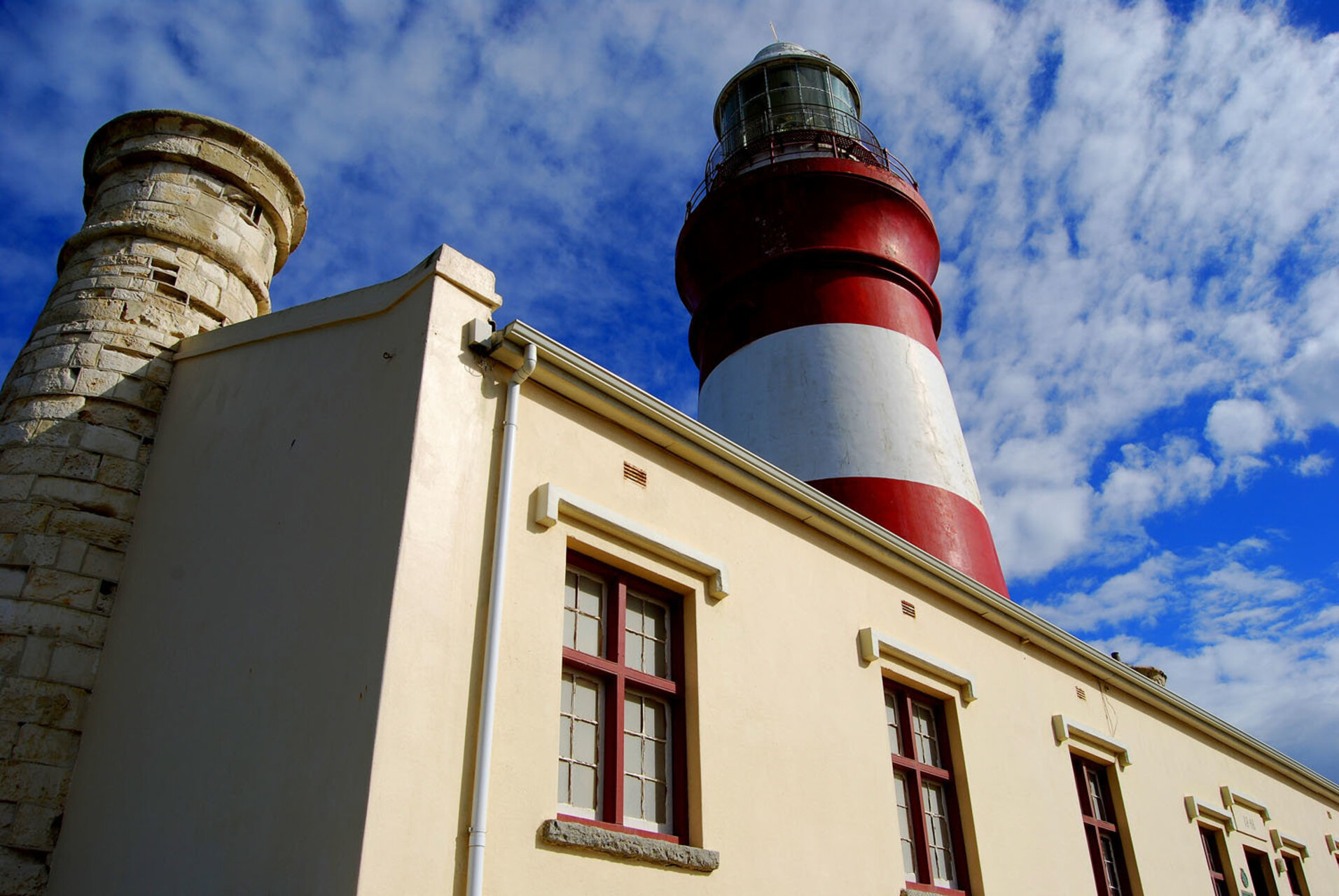
Climb South Africa’s second-oldest working lighthouse, built from limestone quarried right next door, and explore the small museum at its base.
Stand at the official meeting point of the Atlantic and Indian Oceans — a bucket-list photo stop marked by a stone map of the continent.
Learn about the roughly 150 wrecks along this coast and the diverse heritage of the survivors who settled here afterwards.
Fresh seafood restaurants and pubs cluster around the lighthouse, perfect for refuelling after the climb.